Aerial Sling Integration in Yoga Therapy

A Guide to Safe, Supportive, and Therapeutic Application
Aerial yoga is often marketed through dramatic inversions and visually impressive postures, but within the yoga therapy space, the aerial sling can become something far more meaningful: a supportive therapeutic prop that helps individuals reconnect with their bodies, regulate their nervous systems, restore confidence in movement, and access yoga practices in ways that may otherwise feel inaccessible.
At Lokahi Holistic Therapy, the aerial sling is not approached as a performance apparatus first. Instead, it is viewed through a therapeutic and neuroscience-informed lens as a tool for support, sensory feedback, decompression, mobility, regulation, confidence-building, and embodied resilience.
This guide expands on my earlier article, The Transformative Benefits of Aerial Yoga and Spinal Decompression on Physical and Mental Health, and explores how aerial sling integration can be thoughtfully and ethically applied within yoga therapy and supportive care environments.
Reframing the Aerial Sling
In traditional aerial fitness spaces, the sling is often associated with:
acrobatics
advanced flexibility
performance
inversions
tricks
Within yoga therapy, however, the sling may instead function as:
a partial weight-bearing support
a proprioceptive feedback system
a nervous-system-regulating environment
a decompression tool
a mobility aid
a confidence-building framework
a therapeutic sensory support
This distinction matters.
The goal is not to push individuals into advanced shapes. The goal is to create conditions where individuals can safely explore movement, breath, regulation, embodiment, and healing.

Why the Sling Can Be Therapeutically Valuable
1. Spinal Decompression & Reduced Joint Loading
One of the most recognized benefits of aerial-supported movement is spinal decompression. The sling allows gravity to assist in creating space through the spine while reducing compressive load on joints.
For some individuals, this may help support:
postural relief
thoracic mobility
reduced tension patterns
gentle traction
movement exploration with less fear or guarding
Importantly, decompression does not require dramatic inversions. Even partially supported positions can create meaningful relief and mobility support.
2. Nervous System Regulation
The suspended and cocooning nature of the sling can create a uniquely soothing sensory experience for many individuals.
Combined with:
breath regulation
slow rhythmic movement
mindful awareness
supported postures
the sling may help facilitate parasympathetic nervous system activation (“rest and restore” states).
Many clients report experiences of:
reduced stress
emotional softening
improved sleep
mental clarity
decreased physical guarding
feelings of safety and support
The gentle vestibular input from supported swaying or suspended movement may also contribute to regulation when applied carefully and appropriately.

3. Confidence, Self-Efficacy & Play
One of the most overlooked therapeutic benefits of aerial-supported work is the psychological experience of capability.
Many individuals arrive carrying narratives such as:
“I’m weak.”
“I’m too stiff.”
“I can’t do yoga.”
“Movement isn’t for me.”
The sling can provide external support that allows people to experience success earlier in the process.
This may help cultivate:
self-trust
confidence
resilience
curiosity
adaptive thinking
emotional flexibility
Research and clinical observations suggest aerial yoga may improve confidence, emotional resilience, and body awareness through supported challenge and novelty.
For adults especially, rediscovering play can itself become therapeutic.
Populations Who May Benefit from Therapeutic Sling Integration
When appropriately adapted and applied within scope, aerial sling integration may support a broad range of populations
Nervous System & Emotional Regulation
Adults experiencing chronic stress or burnout
High-achieving professionals
Individuals navigating anxiety
Individuals rebuilding resilience after trauma
Caregivers and healthcare professionals
Individuals seeking mindfulness and embodiment practices
Musculoskeletal & Functional Support
Individuals with chronic tension patterns
Athletes needing recovery and decompression
Adults with mobility restrictions
Individuals rebuilding movement confidence after injury
Older adults needing balance and proprioceptive support
Individuals with deconditioning or fear of movement
Neurological & Cognitive Support
Individuals needing proprioceptive input
Clients working on coordination and motor planning
Individuals seeking cognitive-motor engagement
Older adults focused on longevity and cognitive vitality
Men’s Health Applications
The aerial sling may be particularly helpful for:
men who feel disconnected from traditional yoga spaces
lifters and tactical athletes needing mobility and recovery
men experiencing chronic stress and nervous system overload
men recovering from injury or physical burnout
men navigating identity shifts, aging, or performance pressure
When framed through:
mobility
recovery
resilience
performance longevity
nervous system support
the sling often becomes a more approachable gateway into mind-body practices.
Women’s Health Applications
Appropriately adapted sling work may support:
upper-body strengthening confidence
stress regulation
embodied movement exploration
postural support
reconnection with strength and capability
Children & Adolescents
When carefully supervised and developmentally appropriate, sling integration may support:
body awareness
coordination
confidence
self-efficacy
emotional regulation
healthy play experiences
Safety Must Come First
The therapeutic value of the sling only exists when safety, ethics, and scope are prioritized.
Proper Rigging is Essential
Safe rigging is non-negotiable.
On our info page, Lokahi Holistic Therapy FAQs, I emphasize the importance of:
professional rigging guidance
structural safety assessment
appropriate equipment
understanding load-bearing requirements
Home installation should never be improvised.
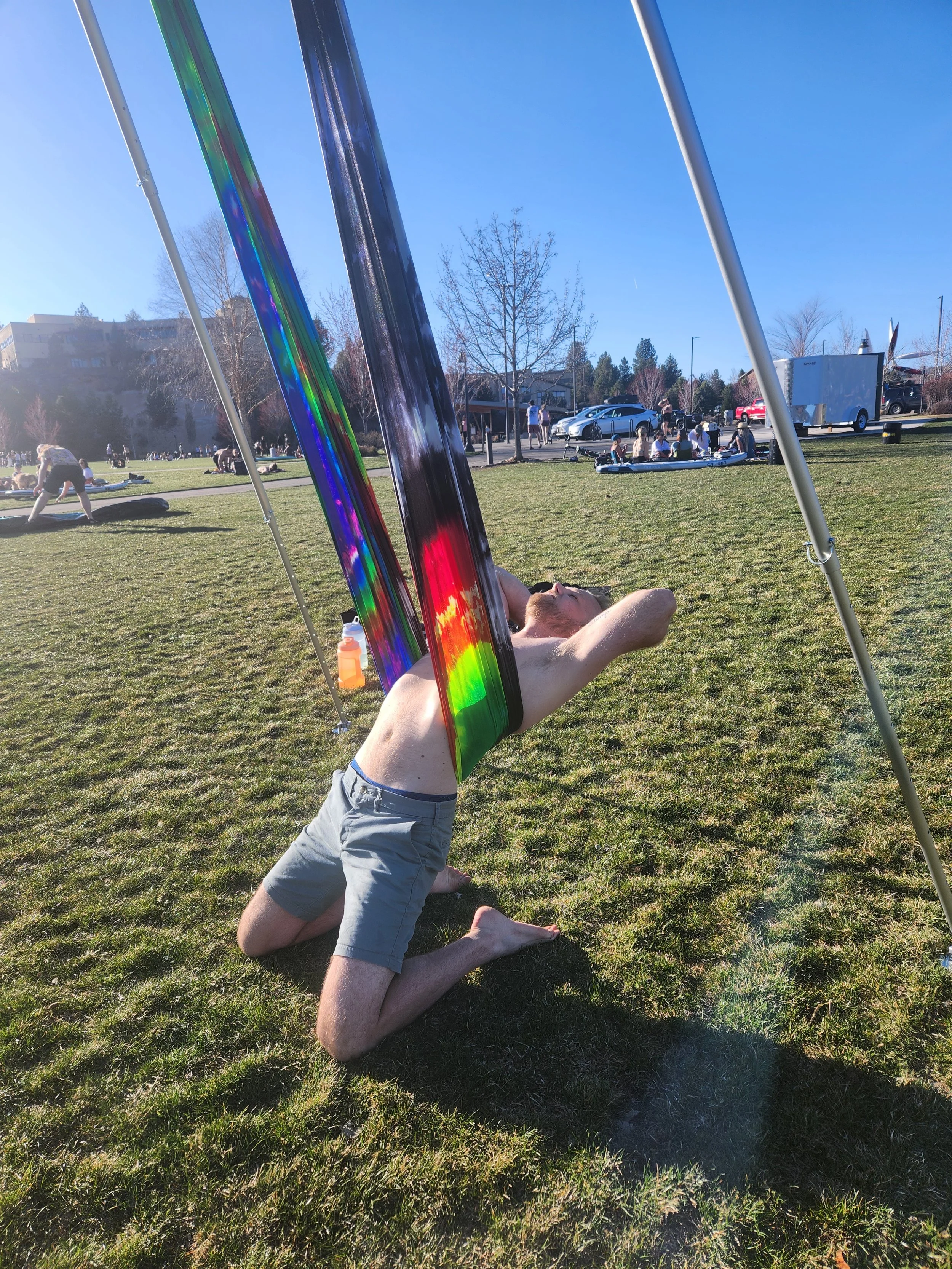
Portable A-frame systems may offer safer alternatives for some environments when professionally rated and properly assembled.

Important Contraindications & Considerations
Not all aerial practices are appropriate for all individuals.
Depending on the client and the specific application, modifications or avoidance may be necessary for:
uncontrolled hypertension
glaucoma
certain cardiovascular conditions
acute injuries
vertigo or vestibular disorders
pregnancy
osteoporosis
recent surgeries
severe mobility limitations
neurological instability
Inversions are not required for therapeutic benefit.
A trauma-informed, individualized, and adaptive approach is essential.
But this by no means suggests that if you fall into one of these diagnostic categories that you can’t benefit from aerial in any capacity at all.
The Importance of Scope of Practice
Yoga therapists do not diagnose or medically treat disease.
Within the yoga therapy framework, the sling may be ethically integrated as:
a supportive prop
a movement aid
a mindfulness support
a breath and awareness tool
a sensory-regulation environment
This work is most effective when collaborative and interdisciplinary.
Potential collaborators may include:
physical therapists
occupational therapists
neurologists
mental health therapists
chiropractors
athletic trainers
pain specialists
integrative healthcare providers
As outlined in Lokahi’s FAQ page, the aerial sling can remain within the IAYT scope of practice when applied thoughtfully, safely, and within one’s training and competence.
A Trauma-Informed & Client-Centered Approach
Aerial-supported work should never be forced, performative, or fear-based.
Therapeutic application prioritizes:
consent
choice
pacing
autonomy
nervous system safety
adaptability
empowerment
For some individuals, simply sitting supported in the sling while breathing may be deeply therapeutic.
For others, more dynamic movement and strengthening may be appropriate.
The intervention should always serve the individual, not the other way around.

The Future of Aerial Sling Integration in Supportive Care
As healthcare and wellness spaces increasingly recognize:
nervous system health
biopsychosocial models of care
sensory integration
movement variability
embodiment
preventative wellbeing
there is significant opportunity for the aerial sling to evolve beyond entertainment and fitness culture into meaningful therapeutic support environments.
The sling can become:
a bridge into movement
a space for resilience-building
a tool for functional support
a pathway toward confidence and self-trust
a restorative sensory environment
a medium for joyful, accessible embodiment
When approached ethically, collaboratively, and with deep respect for safety and individualized care, aerial-supported yoga therapy has the potential to become an innovative and profoundly supportive modality for whole-person wellbeing.
Ready to Explore Integrated Aerial Sling Support?
Whether you are an athlete seeking recovery and mobility support, an older adult wanting to improve balance and confidence, a high-achiever navigating stress and burnout, or someone simply looking for a more supportive and approachable way to reconnect with movement, aerial sling integration offers a unique opportunity to experience yoga therapy through an adaptive, sensory-informed, and deeply supportive lens.
At Lokahi Holistic Therapy, aerial sling support is thoughtfully integrated alongside:
yoga therapy
breathwork and nervous system regulation practices
mindfulness and focused attention training
aromatherapy
sound and sensory integration
mobility and restorative movement support
Each session is individualized to meet your unique goals, needs, health history, comfort level, and lived experience.
No prior yoga or aerial experience is necessary.
Whether your goals involve:
stress reduction
mobility and flexibility
confidence rebuilding
nervous system regulation
recovery support
healthy aging
embodied resilience
reconnecting with joy and play
the aerial sling can become a supportive tool for helping you move, breathe, and heal in new ways.
To learn more about current offerings, collaborative opportunities, or individualized support, visit:
You deserve supportive spaces that help you feel stronger, safer, more capable, and more connected to your whole self.